SEMO Historian
Where history meets the present
Windows Matter


Raeanne, graduate student, tells us about what she learned in Maine.
“My internship was very unique, as it was actually two internships combined into one. Each summer, Maine Preservation in Yarmouth, ME selects four summer fellows to work in their office headquarters for the first five weeks. Following these weeks, the fellows are then transferred to a historic trades firm for the remaining four weeks. The placement for the trades firms are usually random, and typically labor intensive.
In the first five weeks at Maine Preservation’s headquarters on Yarmouth’s Main Street, I was given various researching tasks pertaining to the condition of buildings previously placed on the Most Endangered Buildings List to see if progress had been made. I then compiled my essays into a series which will be used for publicity by Maine Preservation in future publications. My second project dealt with updating Maine Preservation’s Historic Tax Credit Table, which documents every property within their jurisdiction that have been approved for federal or state historic tax credits. This involved the careful analysis of the project’s certification applications, rehabilitation expenses, accessed tax values, and new construction costs to determine if the project was initiated/completed, moving towards initiation, or not initiated. In all, I felt that this portion of the fellowship really put the things I learned in my built environment classes to the test.
The final four weeks of my fellowship were spent at Bagala Window Works in Westbrook, ME where I learned the procedures for sash restoration. Each day, I was placed in a different station to shadow and work beside experienced craftsmen and artisans. Although the work was physically rigorous, I felt a great sense of pride each day with my own products. Through the course of my time with BWW, I not only learned the restoration process (sash removal, glass removal, stripping, sanding, priming, detailing, glazing, glass cutting, and painting), but I was able to shadow the owner of the company to gain firsthand experience with business management, estimating, and customer service.
This fellowship opened my eyes to how vast the career field is for building preservation, because there really is something for anyone with an interest. I feel that this experience has prepared me for my first steps into the real world following graduation, and has gifted me with a greater sense of optimism and accomplishment.”
From Cape Girardeau to Hannibal
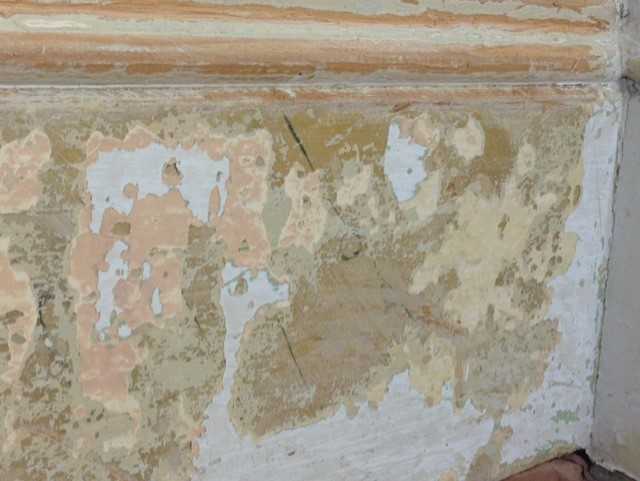
April, graduate student, tells us about her internship in Hannibal, Missouri.
“I worked with Bob Yapp, owner of Preservation Resources, Inc., and the Belvedere School for Historic Preservation in Hannibal, Missouri. I worked as part of his crew in various restoration projects on a two-story brick home built circa 1850. I learned various tips and techniques in the restoration of historic materials. The internship gave me the opportunity to practice various techniques like re-pointing, window restoration and shaping wood epoxy repairs on profiled molding. I also saw the difference between a typical handyman/contractor and a trade artisan that is aware of the unique needs of a historic structure.”
April says she felt prepared for the internship because “The material I have acquired from class work and discussions on the Secretary of Interior’s Standards, character-defining features, architectural styles, and building methods and techniques prepared me to ask informed questions about the project and hold in-depth discussions with Bob about current issues in preservation and restoration.”
Student Takes Her Skills on a Trip (pt. 2)

April, historic preservation graduate student, found the opportunity for herself, another graduate student, and two undergraduate students to help with this wonderful project. April has previous experience in restoring buildings and more than happy to help with this building. Read about her experience below.
“The Historicorps staff, volunteers, and various Forest Service employees had spent the prior two weeks stabilizing and repairing the one-room, wood-frame Surprise Schoolhouse.A flood had washed away the stone foundation, and the structure shifted approximately 6 feet from its pre-flood location. On Tuesday, the four Southeast students spent the day selecting appropriately-sized stones, cleaning them, and mortaring them together onto base stones that had been set below grade in concrete to create the piers that will carry the weight of the structure. Other groups were digging and setting base stones and digging the concrete step units out to reset. By the end of the day, we completed 4 3/4 piers.”
Student Takes His Skills on a Trip


Karl, historic preservation graduate student, joined April and two undergraduate students to the Surprise Schoolhouse to help with construction and preservation of the building. Combining his knowledge of preservation and his want for real world experience Karl explains what he did that day.
“The Surprise schoolhouse is a one-room school built approximately 1910 that served the area around Turner’s Mill on the Eleven point river. A flood in the past year moved the schoolhouse of its foundation and the Historiccorps was asked to move the house as close as possible to the last location (the building was moved sometime between 1925-1930) and build a new foundation to make the schoolhouse structurally safe as it has cultural value as the descendants of the school reside in the area.
We provided extra labor to perform construction of the stone pillar foundations. To accomplish this the Historic Preservation students mixed mortar and installed the original stones into new piers. We also took turns working shovels to backfill around the pillars that were already completed. It was hard and dirty work, but fulfilling as we could see that our labor would result in maintaining the material culture of the region, and would allow for future restorative work. It was an educational experience, and very hands-on. It is one thing to read about old buildings, but it is an entirely different situation to have boots on the ground and see the old building methods in person.
Before we departed the site, we did take a side trip to see the remains of Turner’s mill, which consists of a stone foundation, and a large iron water wheel sitting in the creekbed. The village remains were not visible due to the plant growth, and the spotting of poison ivy discouraged roaming around the woods looking for them. “
Meet Joshua

Joshua joined the Graduate History program August 2018
1) What brought you to Southeast? “I grew up in Cape and I wanted to get a Master’s Degree somewhere close to home. I got my Undergraduate Degree in Accounting from Union University in Jackson Tennessee.”
2) Why History? “I loved reading and studying history and I realized that same love did not exist for accounting.”
3) What do you want to be when you grow up? “A History professor.”
4) What are your favorite things about the history program so far? “The professors generally care about the students and their well being. For me, positive relationships go a long way.”
5) Five words to describe you. “Intelligent, Humorous, Religious, Compassionate, Well-Traveled.”
Meet Nick
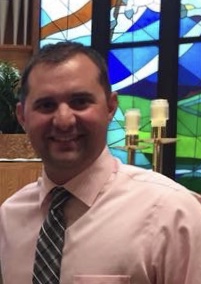
Nick, joined the Graduate History Program August 2108. Here are some quick facts about him.
1) What brought you to Southeast? “The Historic Preservation program.”
2) Why Historic Preservation? “I have a love of museums.”
3) What do you want to be when you grow up? “I want to work in some area of museum operations and ideally at a Sports or Civil War Museum.”
4) What are you favorite things about the historic preservation program so far? “The people are very welcoming.”
5) Five words to describe you. “Easy-going, Funny, Organized, Adventurous, Athletic.”
 SEMO Historian