SEMO Historian
Where history meets the present
Richie Bohn
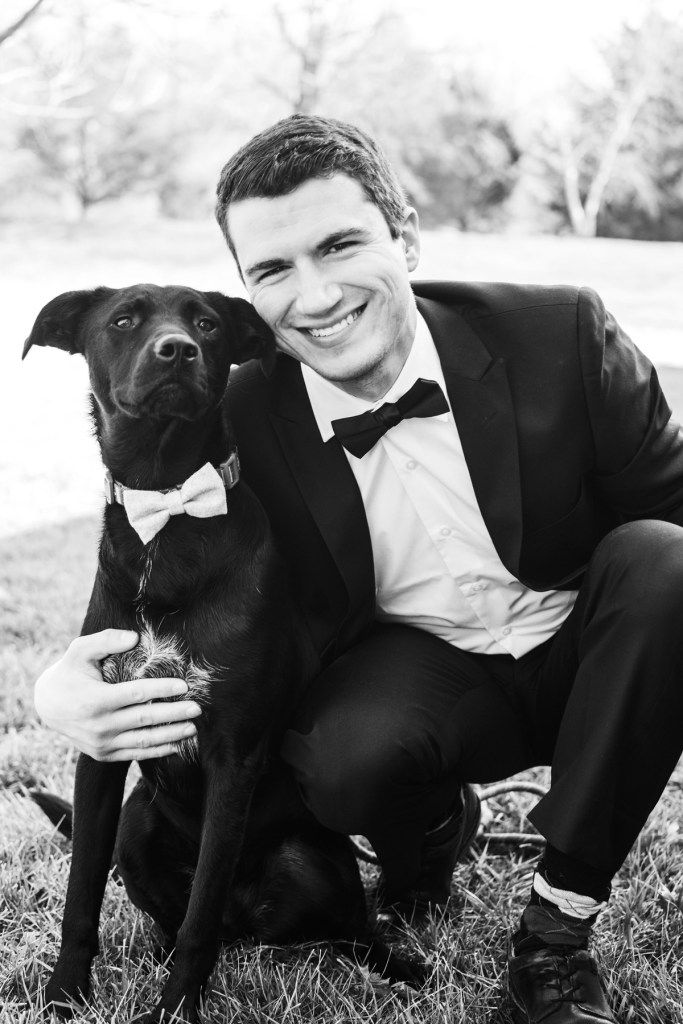
Hi, my name is Richie Bohn, and I’m finishing my MA in History at Southeast. I am from Scott City, Missouri, and graduated high school from Notre Dame (in Cape Girardeau). I got my Bachelor of Science in Secondary Social Studies Education in 2015. I was interested in history, wanted to find a stable job that involved the subject, wanted to coach cross country, and was inspired by seeing how much my uncle enjoyed teaching high school. So, I now teach high school history at Notre Dame as I finish my MA.
I chose Southeast because it was close to home, I was familiar with campus, and I had relatives who had attended there, including my dad who got his M.A. in history there. I like the campus (even though there are lots of hills) and getting to have classes in person. It feels like home but I also feel connected to the outside world at the same time and getting to meet people from outside the area.
I have loved learning about history from an early age, partly due to my dad’s love of the subject, growing up watching historical movies and documentaries with him. He’s always reading a history book and that also inspires me to learn more. I specifically wanted my M.A. in History to expand my knowledge, get the chance to be a student again, be able to earn more money as a high school teacher, have the ability to teach dual credit classes, and give myself the option of teaching at the college level someday if I want to.
I loved my first year in the program as I got to take classes in person and learn new things about historic preservation as well as research, and I enjoyed the opportunity to meet other grad students and spend time with them outside of class as well when we got together to eat downtown a few times.
I’m looking forward to finishing my master’s degree, celebrating my wife and my first anniversary, and pursuing a chance to teach dual credit classes at my school.
Randy Greeves
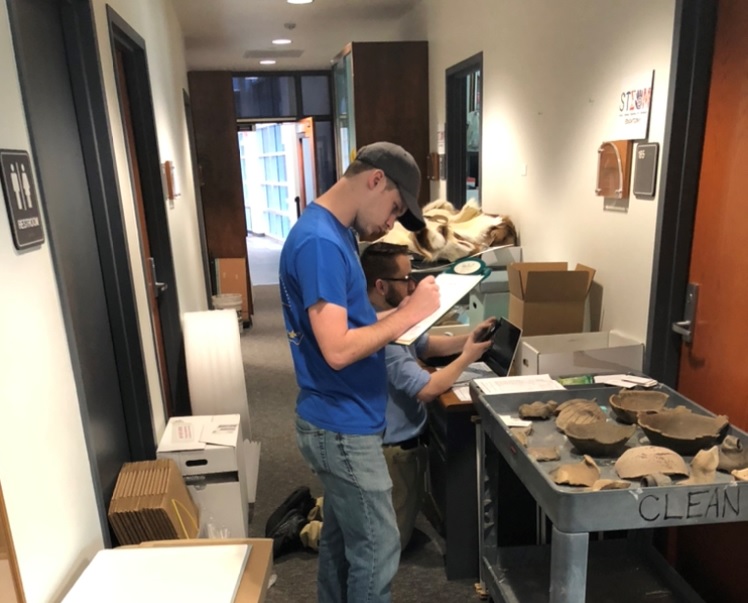
I am from a small town called Oologah in Oklahoma. Oologah is Cherokee for “Dark Cloud” and I graduated high school from Oologah-Talala Highschool in 2015. From there I moved to Rolla, Missouri to start my undergraduate career at the Missouri University of Science and Technology.
I planned to pursue a degree in aerospace engineering, but found out I was not as good at math as I thought I was and transferred to the history department.
I graduated in 2020 with a Bachelors of Science in History with a minor in Political Science. Graduating at the height of the pandemic meant a lot of places I applied to work withdrew their openings as the nation shut down. A professor at S&T told me about SEMO’s graduate program deadline extension and I signed up to see if it would help me decide what to do with my life and degree. I am very glad I did.
Since starting my graduate studies at SEMO a year ago I have found a part time job as a student worker in the Crisp Museum getting hands-on experience, I have been undertaking genealogical research for a patron, explored many abandoned buildings, and created my own archival collection.
My major here at SEMO is a Masters in Public History with a focus in Historic Preservation. I always enjoyed history, and I prefer jobs where I can be hands-on with things which means being able to work in museums or on historic buildings is the perfect fit for me as it fulfills many of the needs I have. There is nothing better than poking around in the back of a museum and finding all the hidden gems that are not on display.
My first year of the program was a hard one, probably one of the hardest years of my life so far. Not only did I move and leave all my friends, support nets, favorite study halls and bars behind, but I did it in the middle of a pandemic with very little time to prepare. I moved into my apartment in Cape two days before my first class started, and I did not move to a very good part of town since I did not know better. However, I found a group of people that were welcoming and professors who were ready to work with me and help me to succeed. I enjoyed all my classes, and was fortunate to have many opportunities to learn and try new things. This program has solidified in helping me decide what I want to do with my life and I am thankful for that.
Doing this masters program was really my life coming full circle. When I was little I wanted nothing more than to be a paleontologist. I had only decided to do engineering because that’s what most people around me thought I would be best at…turns out high schoolers don’t really know what they want. Now I will be able to do something adjacent to my childhood dream. I would really like to work in the Smithsonian Museum in D.C. (partially because they have an awesome fossil collection, and who knows what’s in storage).
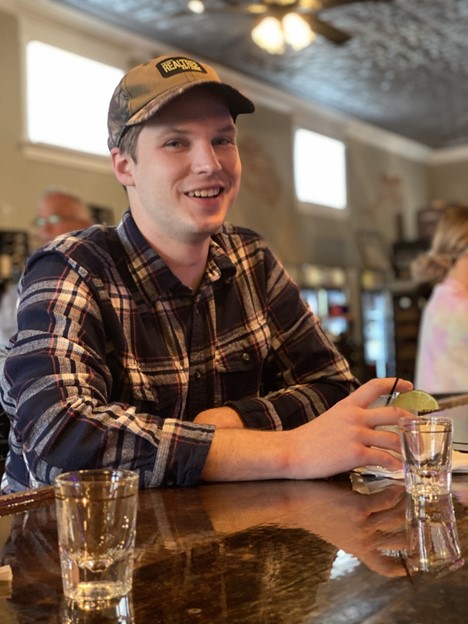
Cape Girardeau is the largest town I have ever lived in, so it’s size has been a bit overwhelming at times. I like the history of the town. It is an old town that has been around longer than Missouri has been a state, and it has a lot of good bars to drink at, fun places to visit, and there always seems to be something to do.
A lot of my inspiration is self derived. I want to work in the Historic Preservation field because I think that is where I will be happiest. Some part of why I am aiming so high with the Smithsonian is because people keep telling me that I won’t make it. The biggest reason I am able to keep moving on and to do all the hard things I need to so I can succeed is my mom. Before I started here I had an opportunity to work for my uncle’s company as a traveling salesman. It was not a job I would have liked in any way shape or form, but he promised I could make a lot of money. I was almost done with the interviewing process and basically had the job lined up when my mom sat me down and made me admit to whether I would be happy doing that or if I would be happier following my heart into the field I am working towards. No matter what I decided to do or how big of a risk I took she always supported me and encouraged me to do what was going to make me happiest and I can’t thank her enough for that.
My favorite thing about the program is how much hands on and practical experience I am getting. For instance in my Building Materials class we would often tour historic buildings and talk about the materials used and how they deteriorate and what can be done to fix that. In my Archives class I was able to create my own archival collection focused around my collegiate experience. Being able to see and do these things in person better equips me to do that task in my professional career while also helping to identify any areas of confusion I may have had.
If you were to ask me about the American presidency or most major historic events that occurred during the 20th century there is a chance that we would spend quite a bit of time talking. I enjoy reading and learning about how the political sphere of the world impacts the social sphere, and since the 20th century sees the most social and political change it is a very exciting time for me to read about.
In the next few months I will be doing my advanced project which will give me even more hands-on experience in the field, and will be continuing to work at the Crisp museum setting up art galleries, helping with exhibits, and cataloging collections.
Maria Mougridis
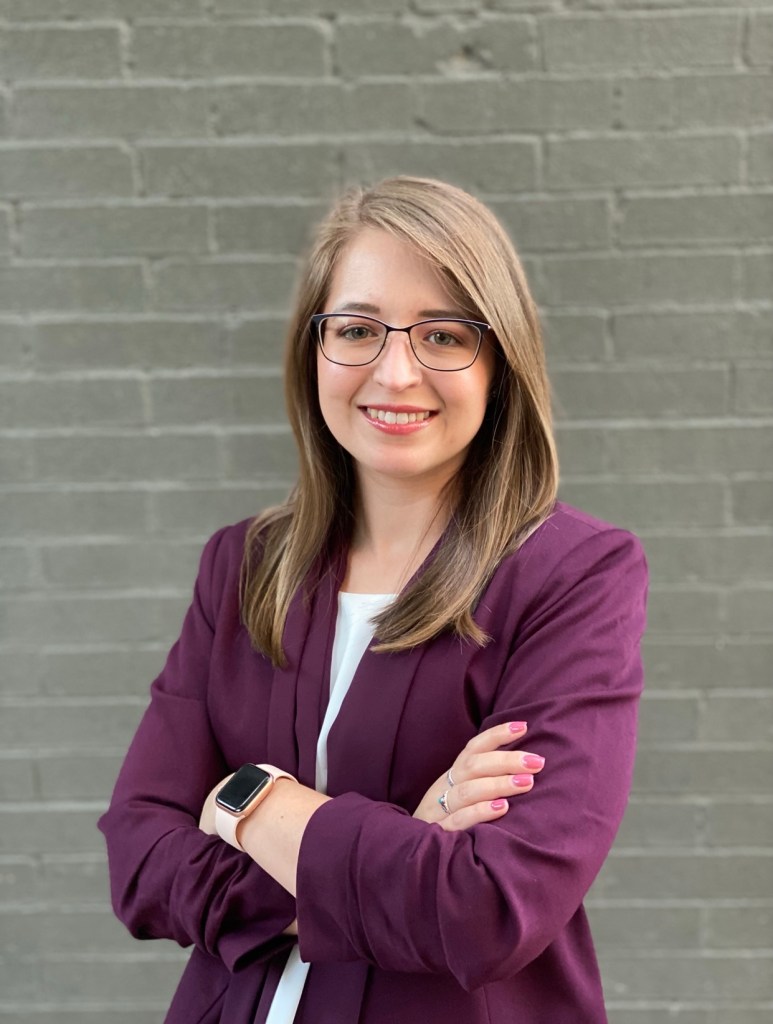
Hello, my name is Maria and I attended grad school at Southeast from 2017-2019! Going to grad school was not something I really thought I would do, but it has really helped me get to where I am.
With graduation from undergrad looming and no job prospects in sight, I decided grad school was the next path for me. When doing my research into grad school, I found the National Council on Public History which lists programs and other resources for the Public History profession. Through NCPH, a website I highly recommend you check out because it has tons of helpful information and resources, I found Southeast. When I looked into the school, it seemed like a good fit and a beautiful campus. I did apply to a couple of other schools, but I ultimately chose Southeast because I was offered a graduate assistantship which made it financially possible for me to attend.
Southeast ended up being a really good fit for me too because the Historic Preservation track offered courses on the built environment that I really enjoyed. Of those classes Field School and History of American Architecture were my favorites!
Attending Southeast was a good decision for me because it gave me a lot of opportunities and really helped me to get the job I have today. The professors have so many connections within the field that there were always a lot of networking opportunities which helped me get my internship and my job. Southeast’s preservation program is well known in the region and locals were always very welcoming. Since so many community members were familiar with the historic preservation program and saw the impact of the program, they actively wanted to work with Southeast students. There were always volunteer, educational, and professional opportunities available to us.
Currently I work for the Texas Historical Commission in Austin, Texas as a Certified Local Government Program Specialist within the Community Heritage Development Division. In this position I am able to work with Certified Local Governments (CLGs) throughout Texas, both cities and counties, to help them promote historic preservation. These communities know they have special historic places that they want to protect so we give them training and guidance so that they can preserve their historic resources and tell their community’s story.
All of the opportunities I had at Southeast and everything I learned has really helped prepare me for this position. Learning about the Main Street Four Point Approach, working on a National Register nomination, and preparing a historic resources survey has given me a lot of knowledge and experience that I have been able to apply to this current position and hopefully to any future endeavors!
For anyone starting grad school I offer two pieces of advice.
Firstly, take advantage of every opportunity you are given. If you have a chance to go to a conference or a networking event, GO. If you have a chance to volunteer or attend a seminar, DO IT. Everything you do in grad school is preparing you for your career and networking is one of the best ways to get your foot in the door, so go to those events and meet as many people as you can.
Secondly, take time for yourself. Whether that is going to therapy, shopping, or spending time with friends away from campus, do whatever you need to do for your mental health because grad school is stressful and can overwhelm you if you let it. I really struggled with my mental health in grad school and wish I had focused more on it.
As stressful and challenging as grad school was for me, I’m glad I was able to go because I don’t think I would have my current job without it. It really did help prepare me for my career.
Max Abbott
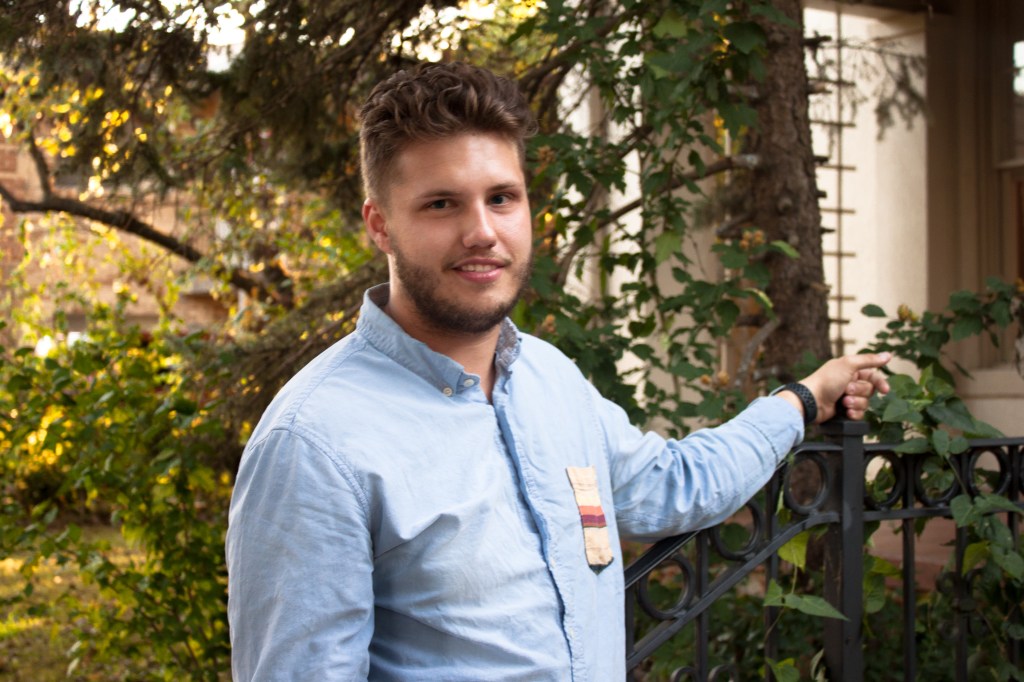
Hi! My name is Max Abbott and I am finishing up my M.A. in History. After graduating, I plan to continue my studies, and hope to earn a doctoral degree in history.
Unlike many of my classmates, I grew up in Cape Girardeau. Growing up off of New Madrid Street, Southeast was my playground. The old pool at Capaha Park cost money, but the fountains in front of Kent Library were free—if we could avoid apprehension by campus police. I’ve almost made it through two degrees here without my mother yelling at me for bringing home poor grades, but I cannot count the times she yelled at me for bringing home coal from the powerplant on campus.
Academically, it was these same experiences that pushed me away from Southeast after high school; I wanted to separate myself from this community and experience something else. Two years of study at a different University, and I knew that it was this community that made the experience here worth it. So, I came back and decided to stick around for grad school here because of the community of students and faculty that made this university more than a childhood playground.
I had always loved history in a particular way; nothing else every gave me the same sense of intellectual fulfillment, but I did not like the way history was taught in school. I loved reading it at home, but history class was laborious and boring. It was Mr. Steve Richardet’s APUSH (Advanced Placement, United States History) class that gave me an understanding of the why of history itself. From there, it was easy for me to decide on history as a major. My affinity for the Brits is the result of signing up for Dr. Joe Snyder’s Modern Britain course and being introduced to the why of British history.
As I finish my time here at Southeast, I am working on a set of projects that I think will have a significant impact. The Center for Writing Excellence is reworking their online tools for helping students use and understand the major citation styles (MLA, APA, Chicago) and I am heading that project. Similarly, I am developing a set of presentations and materials designed to help the Center aid students and instructors in learning/teaching research methods. The materials for both projects are intended to be interdisciplinary in approach; expanding these areas will help the Center strengthen its ties to the University system and increase cooperation.
Lastly, Dr. Snyder and I are working on developing a plan for cooperation between the Student Research Conference and Helix (the Center’s journal); as the two public-facing research outlets offered to students by this university, I believe it is crucial, as a historian, to pursue the expansion of research opportunities for students at university, regardless of field.
In my career moving forward, I want to write a popular history. I also want to write a book about research and writing and publish it open access. I think resources for excellent writing are difficult to obtain if you are not assigned them. So, an open access resource for students conducting/writing researching would be an incredible asset for students.
Public History Options
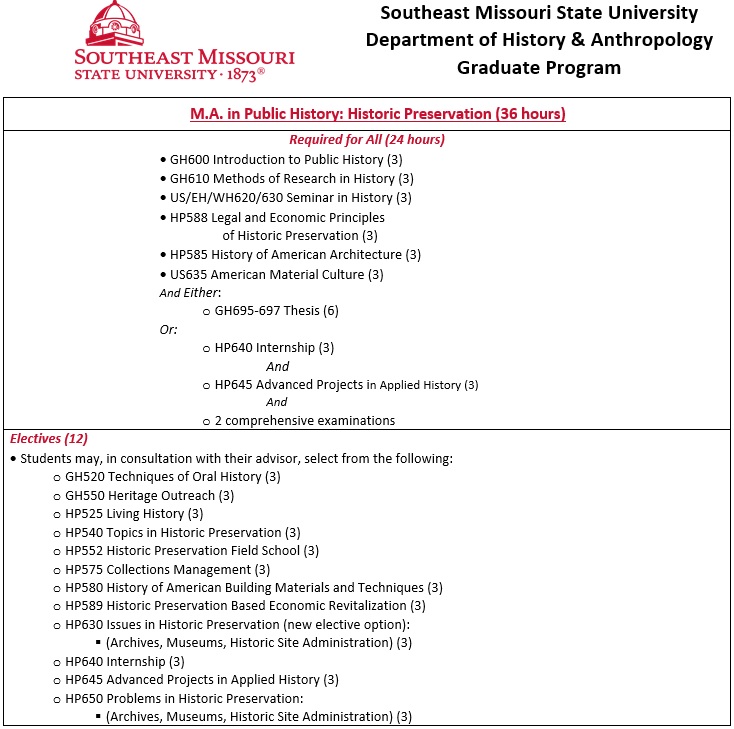
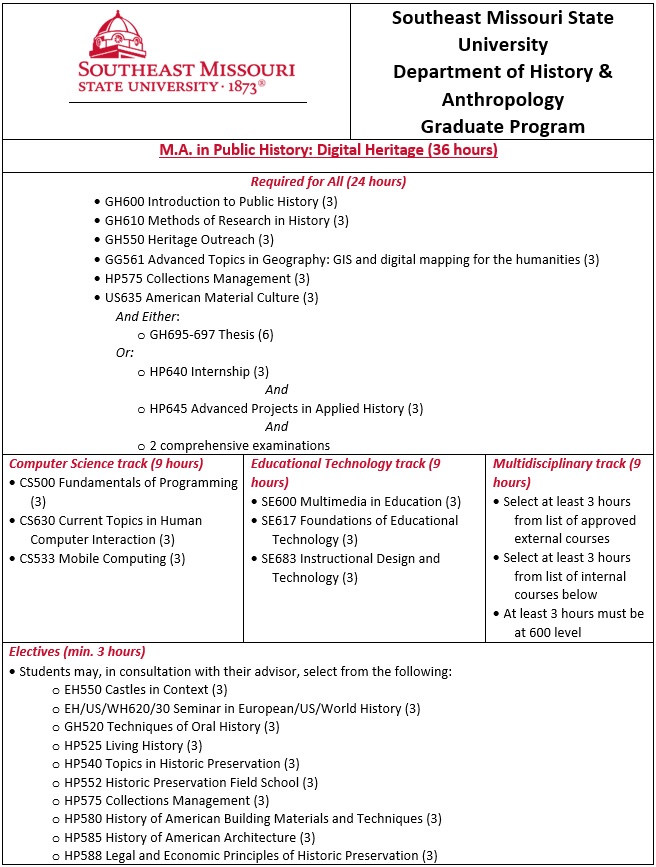
Are you interested in Public History at Southeast Missouri State University, but don’t know where to start? These two charts might help you determine which option is the best fit.
If you have any questions, take a look at our webpage (https://semo.edu/study/MA-public-history.html) or e-mail Dr. Vicky McAlister (vmcalister@semo.edu), our department’s graduate coordinator, for more information!

Rach Teasdale
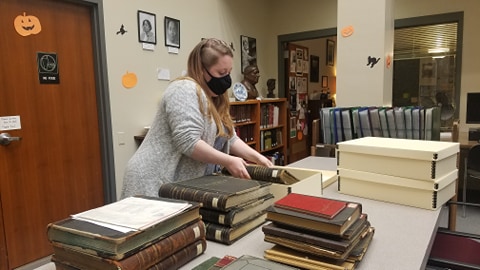
Hello! My name is Rach Teasdale and I’m currently finishing up my first semester in the Public History graduate program at Southeast Missouri State University. I’m employed by Southeast and work a full-time job in Kent Library with my time split between the Acquisitions Department and the Special Collections & Archives unit. I spend my mornings working in Acquisitions receiving all periodicals and ordered materials for the library. My afternoons are spent working in Special Collections & Archives (SC&A) working with the varied collections and donations received.
My job definitely influenced my choice of graduate program and then helped me to decide that the Digital Heritage MA option fit my exact goals. One of my main responsibilities in SC&A is managing the items in our digital collections management systems: ArchivesSpace and CONTENTdm. I recently started working with the software program CONTENTdm in SC&A to manage our digitized collections. As I was working with the metadata of the collections, I realized just how much I enjoyed this type of work. I’m jokingly referred to as the “CONTENTdm database whisperer” at my job, since I’m one of the few that can operate the program without too many hiccups! It feels a bit odd to say that I enjoy working with metadata, but there’s something satisfying about getting all that information together within my Excel worksheets, inputting it into programs, and having the end result of beautifully displayed collections on the web. All of this led me to determine that Digital Heritage was most closely aligned to what I wanted to do in the future. I am so thrilled to start the program and begin the path towards becoming a Digital Archivist.
Augusta Welsh
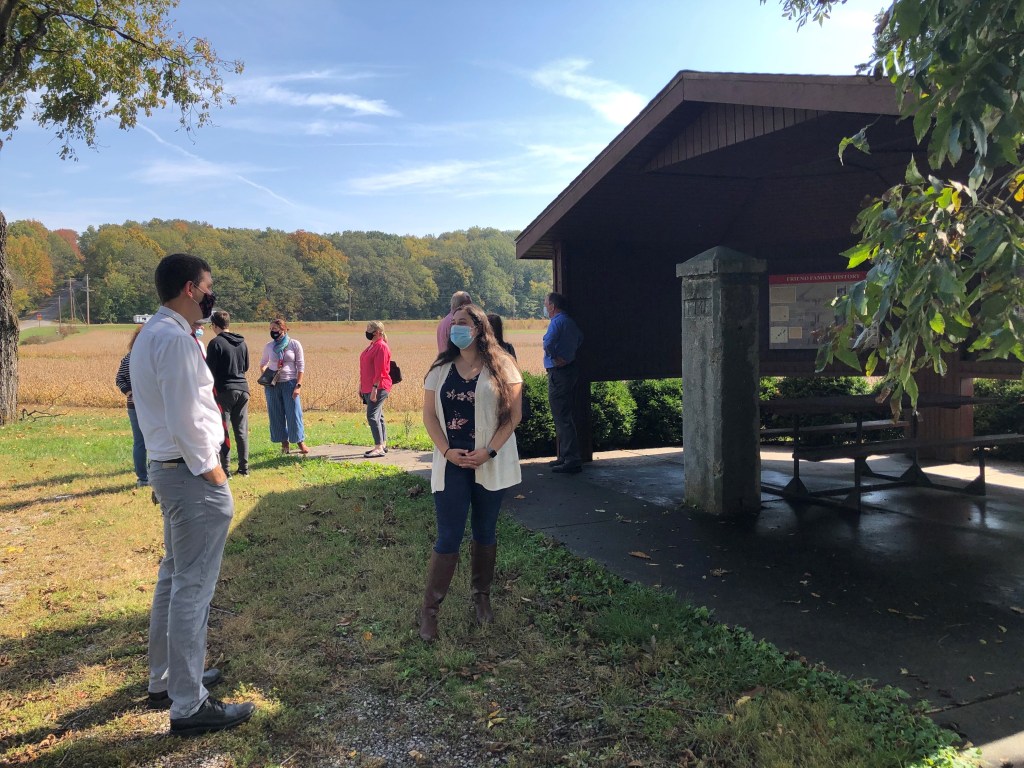
As she enters her second year in the Public History MA Program, Augusta Welsh reflects on her background and experiences so far at Southeast:
“I came to Southeast for the vast networking possibilities, resources and assistantship opportunities in the program,” she says. Augusta arrived with a degree from Howard Payne University (in central Texas) after triple-majoring in Public Policy, Global Studies, and History, with a minor in Music. She currently serves as a teaching assistant for the “Introduction to Public History” course, working with Dr. Steven Hoffman.
“Its all-new, fresh information,” she says. “Presented in a refreshing one-on-one manner by the faculty”
When she was growing up, Augusta wanted to be either “a Veterinarian or a princess,” although now she is “currently exploring ideas within Historic Preservation Education.”
Augusta was raised in Gatesville, Texas, and grew up on a farm, where she gained a strong work ethic and compassion. She and her husband love Cape Girardeau. “It’s exactly what my husband and I need and want, including the downtown lively district but still has that hometown feel that I was raised in.”
Other than Cape Girardeau or Gatesville, Augusta would love to be able to travel to the Shire from the Lord of the Rings. But until it is possible to go to Tolkien’s fantasy world, Augusta looks forward to “waking up excited for the day, no matter where you are or what you’re doing. Just being excited for what the day has ahead of you!”
Digital Heritage Option: How Do YOu Decide?
Our new M.A. degree in Public History: Digital Heritage has three fantastic options. We realize it might be a little confusing, so have put together a list to help follow along. As always, contact us if you have any questions (Dr. Adam Criblez, acting grad coordinator acriblez@semo.edu).
Core (24 hours)
Methodological core
GH600 Introduction to Public History (3)
GH610 Methods of Research in History (3)
Digital core
GH550 Heritage Outreach (3)
GG561 Advanced Topics in Geography: GIS and digital mapping for the humanities (3)
Heritage core
HP575 Collections Management (3)
US635 American Material Culture (3)
And Either:
o GH695-697 Thesis (6)
Or:
o HP640 Internship (3)
And
o HP645 Advanced Projects in Applied History (3)
And
- 2 comprehensive examinations (0)
Option 1: Computer Science track (12 hours)
CS500 Fundamentals of Programming. Data structures, algorithms, object orientation and standard libraries with emphasis on practical programming. (3)
CS630 Current Topics in Human Computer Interaction. Designing interfaces for interactive systems, usability engineering techniques; implementing and evaluating interfaces. Prerequisite: CS500; or permission of department chairperson. (3)
CS533 Mobile Computing. Mobile devise architectures and the application development frameworks for various modern mobile platforms. Prerequisite: CS500; or permission of department chairperson. (3)
And pick 1 of:
HP588 Legal and Economic Principles of Historic Preservation (3)
GH520 Techniques of Oral History (3)
HP525 Living History (3)
HP540 Topics in Historic Preservation (3)
HP552 Historic Preservation Field School (3)
HP580 History of American Building Materials and Techniques (3)
HP589 Historic Preservation Based Economic Revitalization (3)
HP630 Issues in Historic Preservation:
(Archives, Museums, Historic Site Administration) (3)
HP650 Problems in Historic Preservation:
(Archives, Museums, Historic Site Administration) (3)
HP585 History of American Architecture (3)
EH550 Castles in Context (3)
EH/US/WH620/30 Seminar in European/US/World History (3)
Option 2: Educational Technology track (12 hours)
SE600 Multimedia in Education. This is a product-oriented course that examines the role of a variety of media sources in the classroom. Working with wound, photos, and video to design multimedia presentations will be a focal point of the course, and the integration of multimedia productions to in the content curriculum will be addressed. (3)
SE617 Foundations of Educational Technology. An introduction to educational technology and
integration into educational programs through examination if history, philosophy, theory, planning, funding, and current issues and trends in technology. (3)
SE683 Instructional Design and Technology. Design and development of instruction for classrooms incorporating computers and multimedia tools to enhance learning through instructional materials and web pages. (3)
And pick 1 of:
HP588 Legal and Economic Principles of Historic Preservation (3)
GH520 Techniques of Oral History (3)
HP525 Living History (3)
HP540 Topics in Historic Preservation (3)
HP552 Historic Preservation Field School (3)
HP580 History of American Building Materials and Techniques (3)
HP589 Historic Preservation Based Economic Revitalization (3)
HP630 Issues in Historic Preservation:
(Archives, Museums, Historic Site Administration) (3)
HP650 Problems in Historic Preservation:
(Archives, Museums, Historic Site Administration) (3)
HP585 History of American Architecture (3)
EH550 Castles in Context (3)
EH/US/WH620/30 Seminar in European/US/World History (3)
Option 3: Multidisciplinary track (12 hours)
Pick 3 to 9 hours/at least 1 class from:
AW845. Computer Art. Explores creative digitally based art works using Adobe Photoshop, Adobe Illustrator and various scanning software. Use of Macintosh computer desirable, but not required. Basic skills and interest in creating art mandatory. May be repeated for up to 6 hours of credit. (3)
CS500 Fundamentals of Programming. Data structures, algorithms, object orientation and standard libraries with emphasis on practical programming. (3)
CS503. Fundamentals of Computing. Basic understanding of fundamental concepts in computer
organization, networks, algorithms and operating systems. (3)
CS533. Mobile Computing. Mobile devise architectures and the application development frameworks for various modern mobile platforms. Prerequisites: CS500; or permission of department chairperson. (3)
CS575. Advanced Web Development. Latest technologies for the front-end and back-end web
development. Prerequisites: CS500; or permission of department chairperson. (3)
CS603. Introduction to Data Analytics. Data collection, analysis and visualization of Big Data.
Prerequisites: CS500; or permission of department chairperson. (3)
CS630. Current Topics in Human Computer Interaction. Designing interfaces for interactive systems, usability engineering techniques; implementing and evaluating interfaces. Prerequisites: CS500; or permission of department chairperson. (3)
CS632. Emerging and Converging Technologies and Computing. Current emerging and converging technologies related in computer applications and their implications. Prerequisites: CS500; or permission of department chairperson. (3)
CS633. Digital Signal and Image Processing. Aspects and the corresponding computational techniques and tools currently used in digital signal and image processing. Prerequisites: CS500; or permission of department chairperson. (3)
EN624. Editing and Research in Professional Writing. Practicum in the forms of research commonly performed by professional writers, such as historical and data fact-checking; analysis of and collaboration with authorial style; and usage of CMS, APA, and online style manuals. (3)
SE600. Multimedia in Education. This is a product-oriented course that examines the role of a variety of media sources in the classroom. Working with wound, photos, and video to design multimedia presentations will be a focal point of the course, and the integration of multimedia productions to in the content curriculum will be addressed. (3)
SE617. Foundations of Educational Technology. An introduction to educational technology and
integration into educational programs through examination if history, philosophy, theory, planning, funding, and current issues and trends in technology. (3)
SE683. Instructional Design and Technology. Design and development of instruction for classrooms incorporating computers and multimedia tools to enhance learning through instructional materials and web pages. (3)
Pick 3 to 9 hours/at least 1 class from:
HP588 Legal and Economic Principles of Historic Preservation (3)
GH520 Techniques of Oral History (3)
HP525 Living History (3)
HP540 Topics in Historic Preservation (3)
HP552 Historic Preservation Field School (3)
HP580 History of American Building Materials and Techniques (3)
HP589 Historic Preservation Based Economic Revitalization (3)
HP630 Issues in Historic Preservation:
(Archives, Museums, Historic Site Administration) (3)
HP640 Internship (3)
HP645 Advanced Projects in Applied History (3)
HP650 Problems in Historic Preservation:
(Archives, Museums, Historic Site Administration) (3)
HP585 History of American Architecture (3)
EH550 Castles in Context (3)
EH/US/WH620/30 Seminar in European/US/World History (3)
Aaron Schmidt
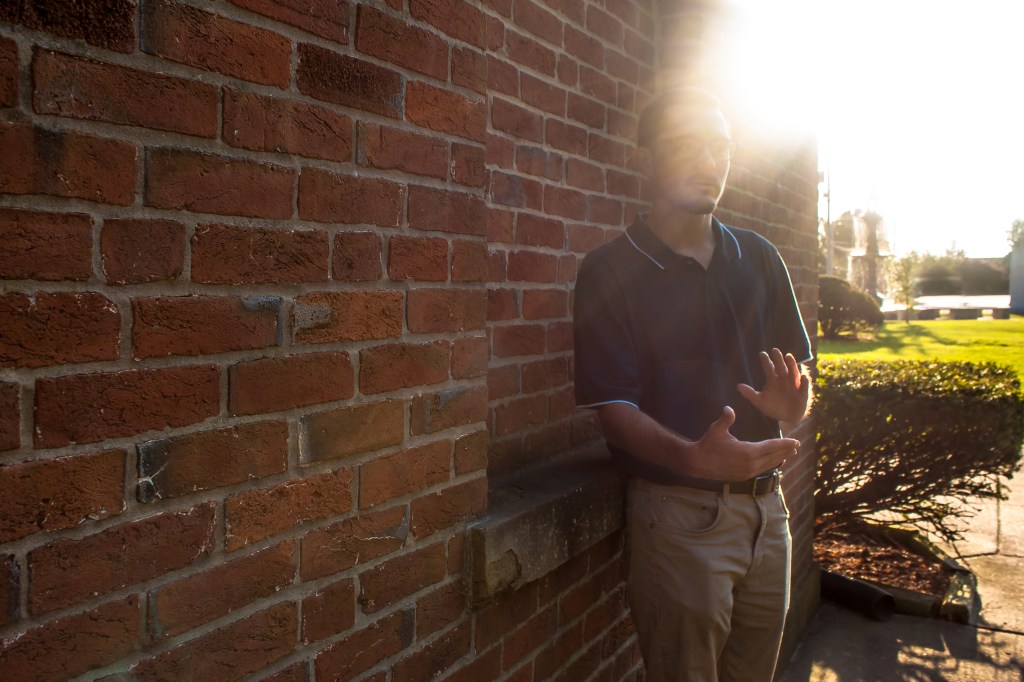
As he enters his second year in the Public History MA program, Aaron Schmidt reflects on why he decided to attend Southeast:
“I chose Southeast because I was impressed by the wide range of experiences that historic preservation students were exposed to, involving everything from architectural history to National Register projects to learning about the Main Street program.”
Aaron is from St. Joseph, Missouri, which “is largely defined by its ‘Old West’ roots and unique built environment, I’ve always had an interest in history and old buildings” and with designs on working as an architectural historian, Aaron has appreciated “the hands-on opportunities, such as presenting with a panel at the State Historical Society conference, working on a National Register project, and contributing research for an Old Town Cape virtual walking tour.”
What five words, describe you, Aaron? “Introverted, realistic, cautious, predictable, musical.”
If you know Aaron, you know how well these words fit. Don’t believe us? Have him sing you his version of “White Christmas!”
New Degree option!
The Department of History and Anthropology at Southeast Missouri State University announces its newly revised MA in Public History option, focused on Digital Heritage. This 36-hour MA degree is unique and innovative as it can be completed either full time or part time and is designed to address the increasing need for digital content in heritage institutions. It is ideal for students seeking a career in public history, or for professionals wishing to update their skills.
Students select one of three tracks, offered in partnership with the Departments of Computer Science and Leadership, Middle and Secondary Education: Computer Science track, Educational Technology track, or Multidisciplinary track. All students complete a core focused on methodology, digital tools, and heritage. Southeast has a strong reputation for placing students in internships across the US and offers a field school at the unique French colonial site of Sainte Genevieve.
The Department of History and Anthropology already offers a nationally ranked MA in Public History option in Historic Preservation, as well as the MA in History. Faculty include specialists in historic preservation, museums, archives, site administration, digital history, and GIS. Applications are currently being accepted for Spring 2021 and Fall 2021 admission.
More information about the MA in Public History: Digital Heritage: https://semo.edu/history-anthropology/academics/graduate/publichistory.html
For more information, please contact: Dr. Adam Criblez, Acting Graduate Coordinator, (acriblez@semo.edu)
 SEMO Historian