SEMO Historian
Where history meets the present
Max Abbott
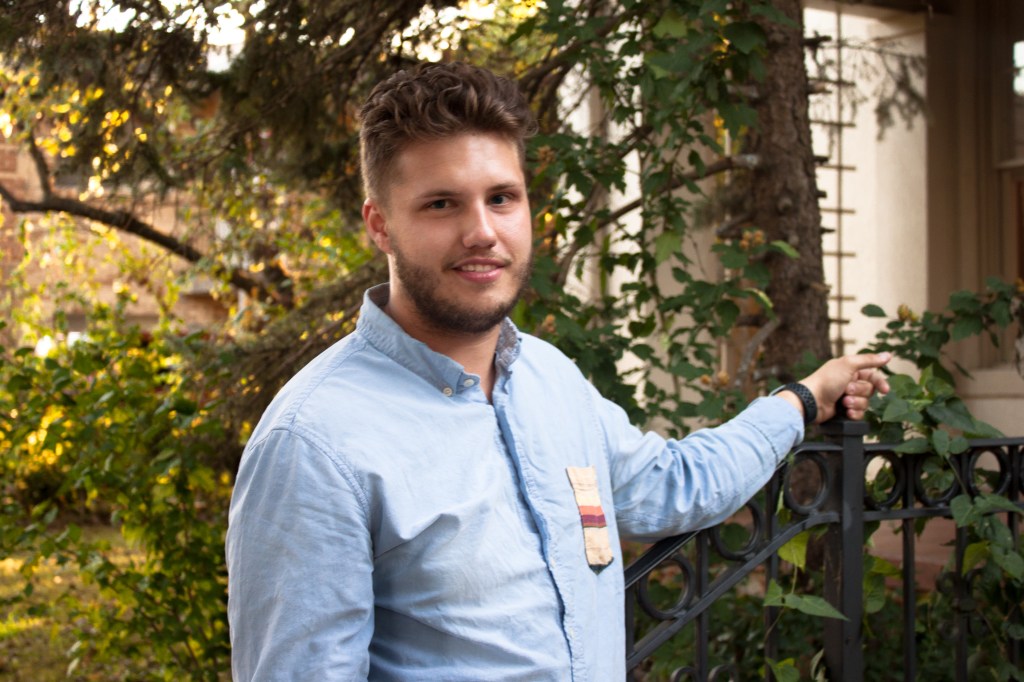
Hi! My name is Max Abbott and I am finishing up my M.A. in History. After graduating, I plan to continue my studies, and hope to earn a doctoral degree in history.
Unlike many of my classmates, I grew up in Cape Girardeau. Growing up off of New Madrid Street, Southeast was my playground. The old pool at Capaha Park cost money, but the fountains in front of Kent Library were free—if we could avoid apprehension by campus police. I’ve almost made it through two degrees here without my mother yelling at me for bringing home poor grades, but I cannot count the times she yelled at me for bringing home coal from the powerplant on campus.
Academically, it was these same experiences that pushed me away from Southeast after high school; I wanted to separate myself from this community and experience something else. Two years of study at a different University, and I knew that it was this community that made the experience here worth it. So, I came back and decided to stick around for grad school here because of the community of students and faculty that made this university more than a childhood playground.
I had always loved history in a particular way; nothing else every gave me the same sense of intellectual fulfillment, but I did not like the way history was taught in school. I loved reading it at home, but history class was laborious and boring. It was Mr. Steve Richardet’s APUSH (Advanced Placement, United States History) class that gave me an understanding of the why of history itself. From there, it was easy for me to decide on history as a major. My affinity for the Brits is the result of signing up for Dr. Joe Snyder’s Modern Britain course and being introduced to the why of British history.
As I finish my time here at Southeast, I am working on a set of projects that I think will have a significant impact. The Center for Writing Excellence is reworking their online tools for helping students use and understand the major citation styles (MLA, APA, Chicago) and I am heading that project. Similarly, I am developing a set of presentations and materials designed to help the Center aid students and instructors in learning/teaching research methods. The materials for both projects are intended to be interdisciplinary in approach; expanding these areas will help the Center strengthen its ties to the University system and increase cooperation.
Lastly, Dr. Snyder and I are working on developing a plan for cooperation between the Student Research Conference and Helix (the Center’s journal); as the two public-facing research outlets offered to students by this university, I believe it is crucial, as a historian, to pursue the expansion of research opportunities for students at university, regardless of field.
In my career moving forward, I want to write a popular history. I also want to write a book about research and writing and publish it open access. I think resources for excellent writing are difficult to obtain if you are not assigned them. So, an open access resource for students conducting/writing researching would be an incredible asset for students.
 SEMO Historian