SEMO Historian
Where history meets the present
Digital Heritage Option: How Do YOu Decide?
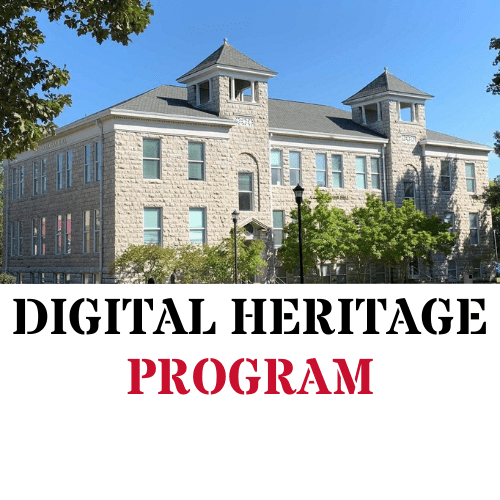
Our new M.A. degree in Public History: Digital Heritage has three fantastic options. We realize it might be a little confusing, so have put together a list to help follow along. As always, contact us if you have any questions (Dr. Adam Criblez, acting grad coordinator acriblez@semo.edu).
Core (24 hours)
Methodological core
GH600 Introduction to Public History (3)
GH610 Methods of Research in History (3)
Digital core
GH550 Heritage Outreach (3)
GG561 Advanced Topics in Geography: GIS and digital mapping for the humanities (3)
Heritage core
HP575 Collections Management (3)
US635 American Material Culture (3)
And Either:
o GH695-697 Thesis (6)
Or:
o HP640 Internship (3)
And
o HP645 Advanced Projects in Applied History (3)
And
- 2 comprehensive examinations (0)
Option 1: Computer Science track (12 hours)
CS500 Fundamentals of Programming. Data structures, algorithms, object orientation and standard libraries with emphasis on practical programming. (3)
CS630 Current Topics in Human Computer Interaction. Designing interfaces for interactive systems, usability engineering techniques; implementing and evaluating interfaces. Prerequisite: CS500; or permission of department chairperson. (3)
CS533 Mobile Computing. Mobile devise architectures and the application development frameworks for various modern mobile platforms. Prerequisite: CS500; or permission of department chairperson. (3)
And pick 1 of:
HP588 Legal and Economic Principles of Historic Preservation (3)
GH520 Techniques of Oral History (3)
HP525 Living History (3)
HP540 Topics in Historic Preservation (3)
HP552 Historic Preservation Field School (3)
HP580 History of American Building Materials and Techniques (3)
HP589 Historic Preservation Based Economic Revitalization (3)
HP630 Issues in Historic Preservation:
(Archives, Museums, Historic Site Administration) (3)
HP650 Problems in Historic Preservation:
(Archives, Museums, Historic Site Administration) (3)
HP585 History of American Architecture (3)
EH550 Castles in Context (3)
EH/US/WH620/30 Seminar in European/US/World History (3)
Option 2: Educational Technology track (12 hours)
SE600 Multimedia in Education. This is a product-oriented course that examines the role of a variety of media sources in the classroom. Working with wound, photos, and video to design multimedia presentations will be a focal point of the course, and the integration of multimedia productions to in the content curriculum will be addressed. (3)
SE617 Foundations of Educational Technology. An introduction to educational technology and
integration into educational programs through examination if history, philosophy, theory, planning, funding, and current issues and trends in technology. (3)
SE683 Instructional Design and Technology. Design and development of instruction for classrooms incorporating computers and multimedia tools to enhance learning through instructional materials and web pages. (3)
And pick 1 of:
HP588 Legal and Economic Principles of Historic Preservation (3)
GH520 Techniques of Oral History (3)
HP525 Living History (3)
HP540 Topics in Historic Preservation (3)
HP552 Historic Preservation Field School (3)
HP580 History of American Building Materials and Techniques (3)
HP589 Historic Preservation Based Economic Revitalization (3)
HP630 Issues in Historic Preservation:
(Archives, Museums, Historic Site Administration) (3)
HP650 Problems in Historic Preservation:
(Archives, Museums, Historic Site Administration) (3)
HP585 History of American Architecture (3)
EH550 Castles in Context (3)
EH/US/WH620/30 Seminar in European/US/World History (3)
Option 3: Multidisciplinary track (12 hours)
Pick 3 to 9 hours/at least 1 class from:
AW845. Computer Art. Explores creative digitally based art works using Adobe Photoshop, Adobe Illustrator and various scanning software. Use of Macintosh computer desirable, but not required. Basic skills and interest in creating art mandatory. May be repeated for up to 6 hours of credit. (3)
CS500 Fundamentals of Programming. Data structures, algorithms, object orientation and standard libraries with emphasis on practical programming. (3)
CS503. Fundamentals of Computing. Basic understanding of fundamental concepts in computer
organization, networks, algorithms and operating systems. (3)
CS533. Mobile Computing. Mobile devise architectures and the application development frameworks for various modern mobile platforms. Prerequisites: CS500; or permission of department chairperson. (3)
CS575. Advanced Web Development. Latest technologies for the front-end and back-end web
development. Prerequisites: CS500; or permission of department chairperson. (3)
CS603. Introduction to Data Analytics. Data collection, analysis and visualization of Big Data.
Prerequisites: CS500; or permission of department chairperson. (3)
CS630. Current Topics in Human Computer Interaction. Designing interfaces for interactive systems, usability engineering techniques; implementing and evaluating interfaces. Prerequisites: CS500; or permission of department chairperson. (3)
CS632. Emerging and Converging Technologies and Computing. Current emerging and converging technologies related in computer applications and their implications. Prerequisites: CS500; or permission of department chairperson. (3)
CS633. Digital Signal and Image Processing. Aspects and the corresponding computational techniques and tools currently used in digital signal and image processing. Prerequisites: CS500; or permission of department chairperson. (3)
EN624. Editing and Research in Professional Writing. Practicum in the forms of research commonly performed by professional writers, such as historical and data fact-checking; analysis of and collaboration with authorial style; and usage of CMS, APA, and online style manuals. (3)
SE600. Multimedia in Education. This is a product-oriented course that examines the role of a variety of media sources in the classroom. Working with wound, photos, and video to design multimedia presentations will be a focal point of the course, and the integration of multimedia productions to in the content curriculum will be addressed. (3)
SE617. Foundations of Educational Technology. An introduction to educational technology and
integration into educational programs through examination if history, philosophy, theory, planning, funding, and current issues and trends in technology. (3)
SE683. Instructional Design and Technology. Design and development of instruction for classrooms incorporating computers and multimedia tools to enhance learning through instructional materials and web pages. (3)
Pick 3 to 9 hours/at least 1 class from:
HP588 Legal and Economic Principles of Historic Preservation (3)
GH520 Techniques of Oral History (3)
HP525 Living History (3)
HP540 Topics in Historic Preservation (3)
HP552 Historic Preservation Field School (3)
HP580 History of American Building Materials and Techniques (3)
HP589 Historic Preservation Based Economic Revitalization (3)
HP630 Issues in Historic Preservation:
(Archives, Museums, Historic Site Administration) (3)
HP640 Internship (3)
HP645 Advanced Projects in Applied History (3)
HP650 Problems in Historic Preservation:
(Archives, Museums, Historic Site Administration) (3)
HP585 History of American Architecture (3)
EH550 Castles in Context (3)
EH/US/WH620/30 Seminar in European/US/World History (3)
 SEMO Historian